- Call us : +91 96631 54960

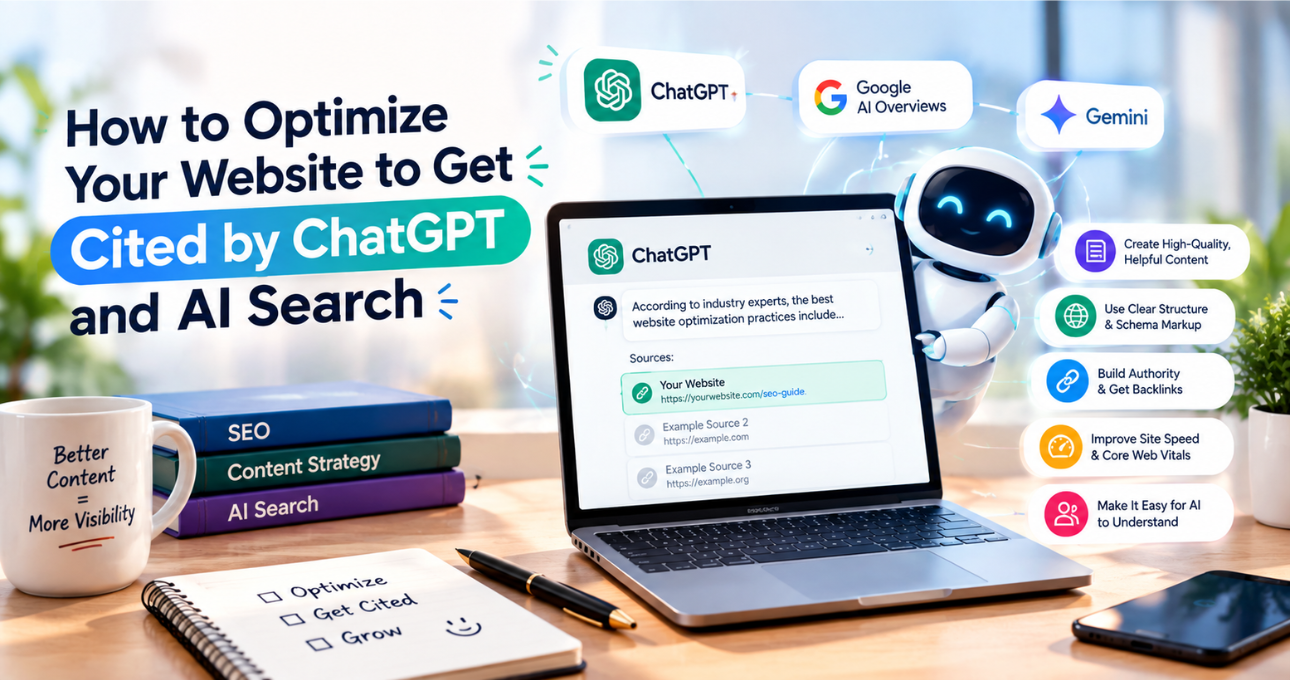

Search is changing quickly. People are no longer using Google for every question. They are also asking tools such as ChatGPT, Google AI Overviews, Gemini, and other AI search platforms for direct answers. This shift creates a new opportunity for businesses that want AI to discover their websites.
ChatGPT SEO focuses on making website content easy for AI systems to understand, trust, and use when generating answers. Instead of only trying to appear as a blue link on a search results page, businesses now need to think about how their content can become a useful source for AI-generated answers.
ChatGPT SEO is the process of improving website content and structure so AI-powered search systems can better understand and potentially reference it.
Traditional SEO mainly focuses on rankings in search engines. ChatGPT SEO goes a step further by making content useful for conversational searches.
For example, a traditional search might be:
"Best digital marketing agencies in Bangalore."
An AI search question could be:
"What should a Bangalore startup look for when choosing a digital marketing agency?"
The second question requires detailed, useful information rather than just a list of keywords.
If you are wondering how to get cited by ChatGPT, start with the quality and usefulness of your website rather than trying to manipulate AI systems.
1. Create Original and Helpful Content
AI systems need reliable information to answer questions. Your website should provide information that actually helps readers.
Instead of writing a general article such as "What Is SEO?", create useful content with practical details.
For example:
Original information gives your website more value than content that simply repeats what many other websites already say.
2. Answer Questions Clearly
AI search often works around questions and conversations. Therefore, structure your content around the questions your customers ask.
Use headings such as:
Give a direct answer immediately after each heading. Then provide supporting details.
This makes the content easier for both readers and search systems to understand.
3. Improve Your Content Structure
Good ChatGPT optimization is not only about keywords. Your entire page should have a clear structure.
Use:
Avoid filling pages with unnecessary text just to increase word count.
AI search optimization combines traditional SEO principles with content designed for conversational and answer-based searches.
A useful approach is to focus on five areas:
Your website should make it easy for search engines and AI systems to understand who you are, what you offer, and what topics you cover.
Instead of publishing unrelated articles, create multiple useful pages around your main business topics.
For example, a digital marketing agency could publish content about:
This creates a connected content ecosystem and helps establish expertise around a subject.
Traditional SEO is still important. AI search does not replace the need for a technically sound and trustworthy website.
| Area | Traditional SEO | ChatGPT & AI Search Optimization |
|---|---|---|
| Main goal | Search visibility | Visibility in AI-generated answers |
| Content | Keyword-focused and useful | Question-focused, useful and clear |
| Structure | Headings and internal links | Clear answers and structured information |
| Authority | Backlinks and reputation | Trust, expertise and reliable information |
| User behavior | Search and click | Ask, read and continue the conversation |
| Important content | Landing pages and blogs | Guides, FAQs, comparisons and original insights |
| Measurement | Rankings and organic traffic | AI mentions, citations, referral traffic and visibility |
The two approaches should work together rather than being treated as completely separate strategies.
Website optimization for AI search starts with making your website technically accessible and easy to understand.
Make sure your website:
Technical problems can make it harder for search systems to access or understand your content.
GEO optimization, or Generative Engine Optimization, focuses on improving the chances of content being surfaced in AI-generated search experiences.
GEO often involves creating content that is:
For example, instead of writing a long introduction before answering "What is GEO?", give the definition first and explain it afterward.
LLM SEO refers to optimizing content for large language model-based search and answer systems.
The goal is not simply to repeat a keyword. Instead, businesses should provide complete information around a topic.
Consider an article about digital marketing costs. A useful article could explain:
This type of content gives an AI system more useful information to work with.
If you want to know how to appear in ChatGPT, focus on becoming a reliable source rather than trying to force a mention.
Publish Original Information
Research, surveys, statistics, case studies, and first-hand insights can make your content more useful.
Keep Information Updated
Outdated information can reduce the value of a page. Review important content regularly, especially pages about technology, pricing, regulations, and industry trends.
Build Strong Internal Linking
Connect related articles naturally. For example, an article about AI SEO can link to related pages about GEO, AEO, LLM SEO, and traditional SEO.
Earn Relevant Mentions
Build your brand presence through legitimate industry websites, publications, directories, partnerships, and other relevant sources.
Do not focus only on getting a large number of backlinks. Relevance and quality matter more than simply increasing link counts.
AI search citations are references or links that may appear alongside AI-generated answers. Their appearance and selection depend on the platform, query, location, available sources, and other factors.
Similarly, Google AI Overviews optimization should not be treated as a separate replacement for SEO. Strong technical SEO, useful content, authority, and clear answers remain important.
Businesses should therefore create content for users first while making that content easy for search systems to understand.
Businesses that do not have an internal SEO team may consider AI SEO services Bangalore providers to help with content strategy, technical SEO, GEO, AEO, and AI search visibility.
Before choosing a service provider, check whether they can explain their process clearly.
Ask about:
Be careful with anyone promising guaranteed ChatGPT citations or guaranteed placement in AI answers. AI-generated results can change based on the query and platform.
The future of search is becoming more conversational. People want direct answers, useful recommendations, and quick explanations. This makes ChatGPT SEO an important part of a broader digital visibility strategy.
The best approach is not to create content only for AI. Create genuinely useful content for people, then make it clear, structured, technically accessible, and trustworthy for search systems.
1. What is ChatGPT SEO?
ChatGPT SEO is the practice of creating and optimizing website content so AI-powered search systems can better understand the information and potentially reference the website in relevant answers.
2. How can I get cited by ChatGPT?
There is no guaranteed way to receive a ChatGPT citation. You can improve your chances by publishing original, accurate, useful, well-structured content and building strong website authority.
3. What is the difference between SEO and GEO?
SEO focuses broadly on visibility in search engines, while GEO focuses on improving the visibility and usefulness of content within generative AI and AI-powered search experiences.
4. Does traditional SEO still matter for AI search?
Yes. Technical SEO, website accessibility, useful content, internal linking, authority, and good user experience continue to provide an important foundation for AI search visibility.
5. How often should I update content for AI search?
There is no fixed schedule. Review important pages whenever information changes and periodically update major guides with accurate facts, new examples, and current industry information.

Leave a Comment
Your email address will not be published. Required fields are marked *